
St. John’s Best-Kept Snorkeling Secret
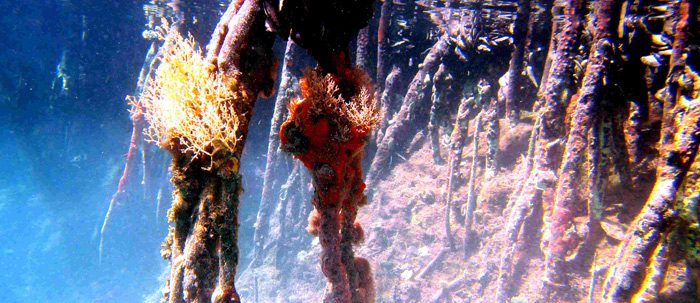
So you snorkeled a time or two, spotted some pretty fish and thought you’d seen it all. All snorkeling is the same, right? Not quite. There’s an underwater aquarium so rich with life on St. John’s East End that it’s been studied by scientists!
In 2009, U.S. Geological Survey (USGS) scientists revealed the discovery of what is described as a “secret coral garden” in Hurricane Hole. What makes this area so unusual? Its shallow bays lined with mangrove trees have dense, tangled roots that prevent soil erosion and serve as protection for marine life. While other ecosystems have suffered decline over the years, Hurricane Hole has flourished. It not only houses the first known occurrence of coral in a mangrove ecosystem, but it has an astonishing diversity of it as well as sponges. Of the 45 coral species identified around St. John, 30 of them can be found in this one bay. No other similar mangrove ecosystem like it exists in the Caribbean!
Tucked among the roots, you will discover a colorful array of anemones and fish. Snorkel up close to see a virtual nursery of juvenile barracuda, tarpon, squid, snapper, lobster, butterfly fish and more. Abundant seagrass beds and algae attract sea cucumbers, upside down jellyfish, conch and stingray.
Seeking to provide greater protection, President Clinton established the Virgin Islands Coral Reef National Monument in 2001. The monument includes 12,708 acres of federal submerged land (including Hurricane Hole) within a three-mile belt off St. John.
Only the Princess Bay area of Hurricane Hole is accessible by land (right off the side of Route 10, East End Road, 1.8 miles east of the Coral Bay Moravian Church); boat access is your best bet. Help preserve this valuable resource by observing without disturbing, and navigating carefully without stirring up sediment.