
A Peek Into St. John’s Wild History
It’s trivia time! Let’s see what you know about our beloved Caribbean paradise.
The U.S. Virgin Islands nickname is The American Paradise. St. John’s nickname is Love City.
The Virgin Islands is one of five U.S. territories including Puerto Rico, Guam, the Northern Mariana Islands and the American Samoa.
The Virgin Islands is the only place in the United States where you drive on the left side of the road.
Christopher Columbus named these islands “The Virgins” in reference to the beauty of St. Ursula and her 11,000 virgins.
Artifacts and petroglyphs (rock carvings) by the Taino Indians date back from 700 to the late 1400s.
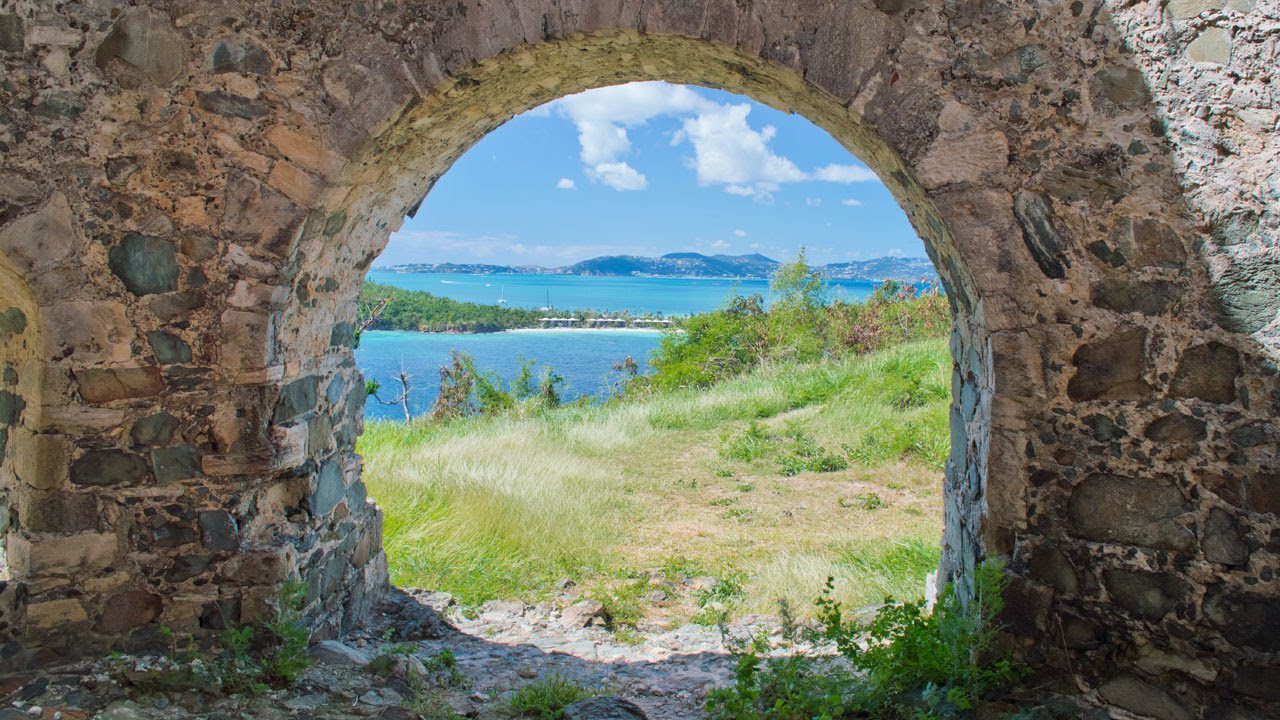
By 1733, there were 109 plantations on St. John, the largest of which was Annaberg Sugar Plantation which still stands today as a landmark and historical site.
Laurance Rockefeller donated 5,000 acres of St. John to the U.S. National Park Service in 1956.
President Clinton established the Virgin Islands Coral Reef National Monument in 2001 which includes 12,708 acres of federal submerged land off St. John with the intent to preserve coral reef resources.
There are more than 50 inlets, islands and cays that make up the Virgin Islands, most uninhabited.
The Virgin Islands were previously owned by Holland, Spain, France, Britain and Denmark before the United States paid 25 million dollars in gold for them in 1917.
The capitol of the Virgin Islands, Charlotte Amalie, was named after Danish King Christian V’s wife.
The official style of folk music known as quelbe originated in the Virgin Islands, also known as scratch band music, which turns random objects into instruments.
The V.I. capitol of Charlotte Amalie on St. Thomas is home to the second oldest synagogues in the Western Hemisphere built in 1833. You can still visit it today and see the sand floors and mortar walls comprised of lime, sand and molasses!
Last but not least, the average life span on St. John is 79 years. What better reason to go!