
The Frigatebird: Pirate of the Sky
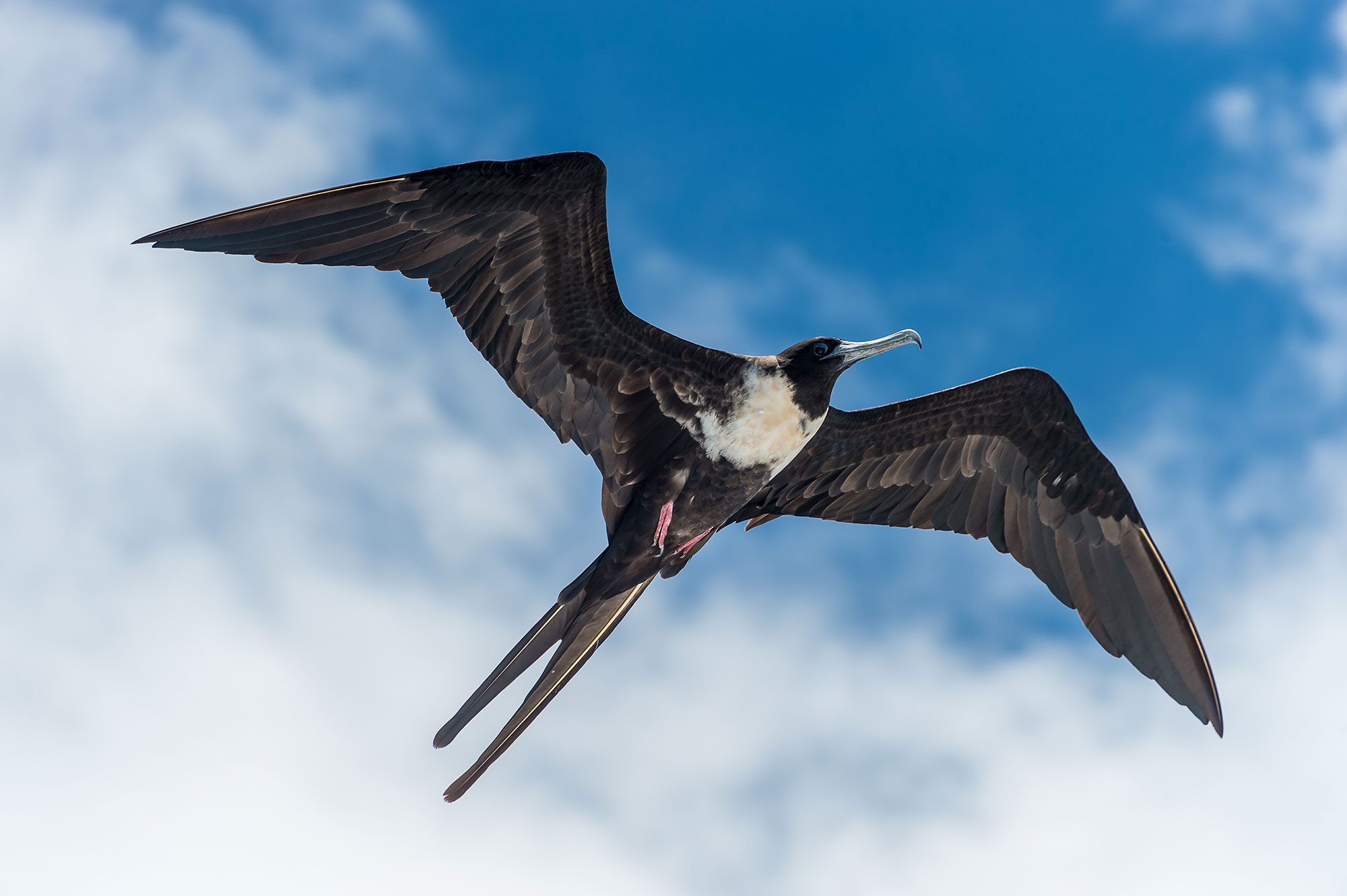
If you’ve spent time in the Virgin Islands, chances are you’ve seen a frigatebird gliding high overhead, especially near the coast or circling above the water hunting for its next meal. Let’s dive in to what makes these elegant birds such an unique presence around St. John and the surrounding islands.
Just west of Jost Van Dyke and north of St. John lies the uninhabited islands of the Tobago Cays, the only nesting site in the British Virgin Islands for magnificent frigatebirds (one of five species) which nest in seaside trees.
Frigatebirds are expert fishers, when conditions are right. They swoop close to the surface to snatch squid, flying fish and other marine prey, but they’re also infamous kleptoparasites as they steal food from other seabirds in mid-air. A frigatebird may chase a gull or booby, harassing it until it regurgitates its catch, which the frigatebird then snatches before it hits the ocean. This piracy, combined with their lack of waterproofing, has earned them the nicknames “pirates of the sky” and “man-of-war.”
Other interesting facts:
• These seabirds never actually land on water as their plumage cannot get wet or they would drown.
• The bones of frigatebirds are very light and contribute only 5% to total body weight.
• Male frigatebirds display their iconic red throat pouches during breeding season.
• The female lays just one egg and both parents take turns incubating it for nearly two months — one of the longest incubation periods among birds. The chick may be cared for up to a year, an unusually long time in the avian world.
• Sailors once saw them as omens of land nearby, and islanders have included them in folklore and carvings for generations.
• Frigates wingspan is over 7.5 feet — bigger than a bald eagle!
• Having the largest wing-area-to-body-weight ratio of any bird allows them to soar continuously and only rarely flap their wings.
• They often remain on the wing for up to 12 days while foraging. One frigatebird, being tracked by satellite, stayed aloft for two months.
• They sleep while in flight using one hemisphere of the brain at a time.
• Frigates can live over 40 years.
The frigatebird is a marvel of avian engineering and behavior. Whether you’re watching them drift silently above the Virgin Islands or catching a free ride by the draft created by boat, these birds offer a glimpse into the wild beauty and mystery of the Caribbean skies.