

Decoding the U.S. Virgin Islands Flag
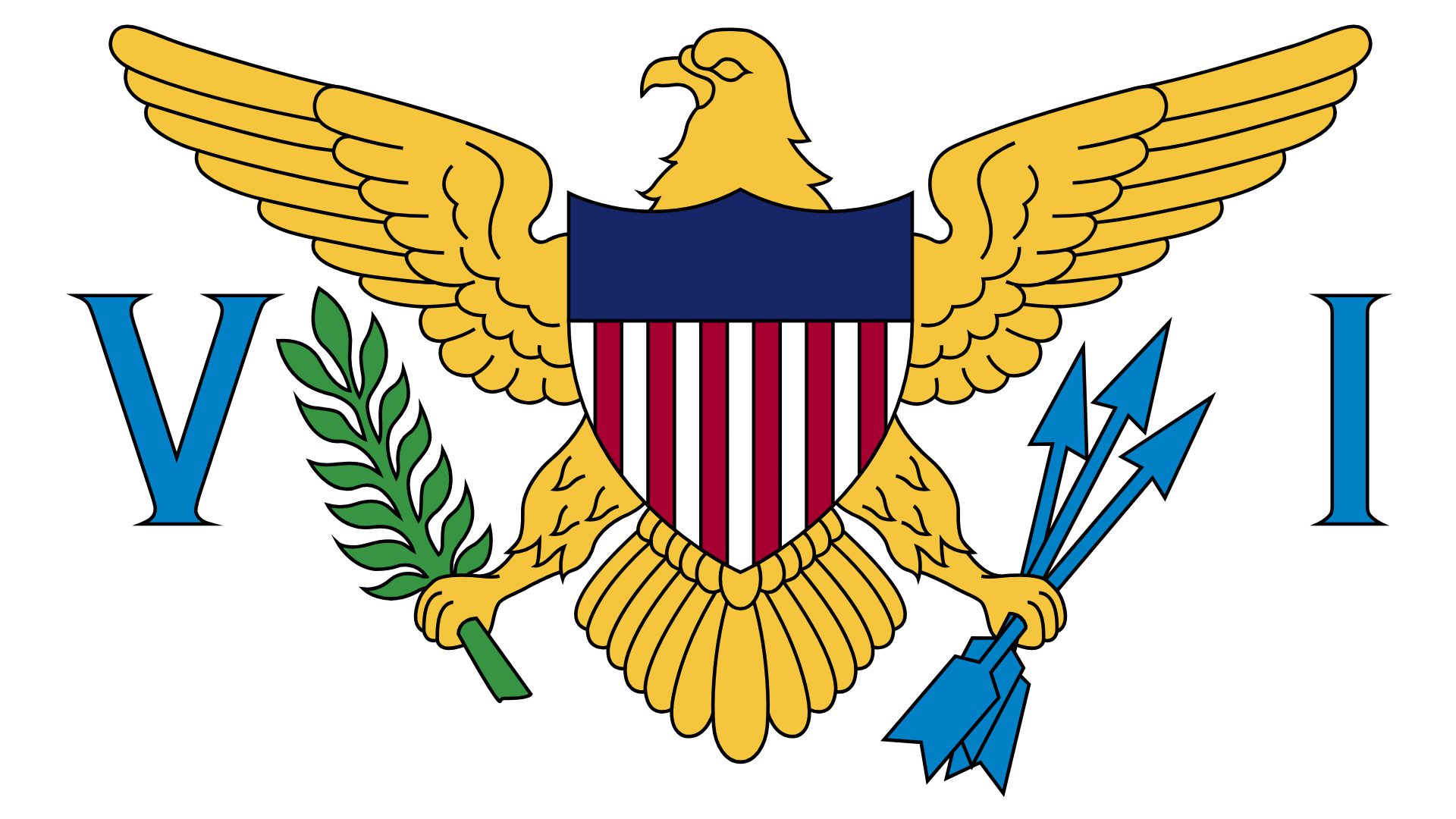
The flag of the United States Virgin Islands is a vibrant symbol of identity, patriotism and historical legacy for this Caribbean territory. Officially adopted in 1921, the flag blends imagery from the United States with elements unique to the Virgin Islands, serving as a visual representation of the islands’ culture, governance, and pride.
A Symbol of Unity and Identity
The U.S. Virgin Islands, comprising St. Thomas, St. John, St. Croix and several smaller isles, have flown this flag as a symbol of their status as an unincorporated territory of the United States since 1917, when the islands were purchased from Denmark.
The design was created by Percival Wilson Sparks, a U.S. Navy officer, who enlisted local schoolteachers to help render it into the final hand-drawn version still honored today.
Design Elements and Their Meaning
At first glance, the flag’s design is simple but deeply symbolic. It features:
1. The American Eagle
At the center of the flag is a bold depiction of the American bald eagle, representing the U.S. government’s sovereignty over the islands. It mirrors the U.S. national coat of arms but with notable modifications that connect the territory to its own identity.
• The eagle faces forward with outstretched wings, signifying vigilance, strength and protection.
• It holds three arrows in one talon and an olive branch in the other, symbols of readiness for defense and a desire for peace.
2. The Three Arrows
The three arrows in the eagle’s talon stand for the three main islands:
• St. Thomas
• St. John
• St. Croix
These arrows highlight the unity among the islands while honoring their distinct identities.
3. The Olive Branch
The olive branch mirrors the one found in the Great Seal of the United States, representing peace, stability, and the hope for a harmonious future under U.S. governance.
4. The Letters “V” and “I”
Flanking the eagle are the large gold initials “V” and “I,” an abbreviation for “Virgin Islands.” These letters emphasize the individuality of the territory while still aligning it closely with the United States.
Historical Significance
The flag emerged just a few years after the 1917 transfer of the islands from Denmark to the U.S. The visual representation was intended to reinforce both national unity and a distinct territorial identity. Since its adoption, the flag has been a proud emblem flown at government buildings, schools, sporting events and community gatherings.
More Than a Banner
For the people of the Virgin Islands, the flag is more than a symbol of political status, it is a reflection of their complex cultural heritage which includes African, European, Caribbean and American influences. It serves as a constant reminder of their resilience, their contributions to the American story, and their unique place in the world.
The flag of the U.S. Virgin Islands captures the spirit of a people rooted in history but looking toward the future. Through its eagle, arrows, olive branch, and bold letters, it tells a story of strength, unity, and hope, a story that continues to evolve with each new generation of Virgin Islanders.