
Searching for Sea Glass on St. John
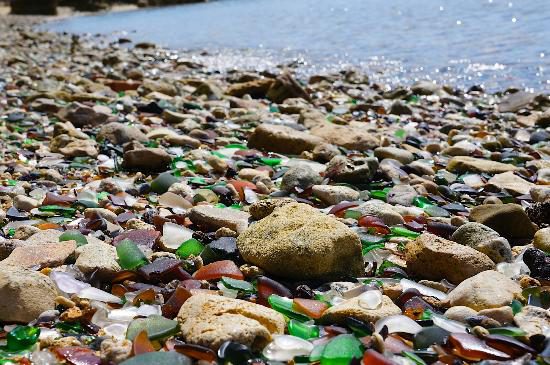
Glass is among the many treasures of the sea, some of which has tumbled along the ocean floor for decades or even centuries before it is found. Millions of people make a hobby out of hunting sea glass all over the world. If you don’t understand the addiction, you’ve probably never found your first well-worn shard later identified as a vintage gem from days gone by.
What distinguishes discarded ordinary glass from sea glass?
In a word, time. The longer glass is exposed to sand, rocks, tide and weather, the more frosty the appearance. Sharp edges are worn smooth and the surface is porous. Technically, these microscopic pores resemble c-shaped abrasions, which isn’t particularly important unless you are verifying a purchase of authentic versus artificial sea glass.
Where does sea glass come from?
The old wives tale says that every time a sailor drowned at sea, mermaids would cry and their tears washed ashore as sea glass. We can go with that theory or a more plausible one: People have used the ocean as a dumping ground for many years. If you’re lucky you may find a marble – used to provide ballast in ships, used by painters to mix batches of paint and used as a bottle stopper in the late 1800s. Glass beads hung on lampshades and were used as currency among coastal tribes. Sources of sea glass are determined by its color. Here are some of the most common:
• Red is highly coveted as the gold ore in the mixture made it expensive to create. Victorian lamps and 1950s Schlitz beer bottles were made from red glass.
• Multi-colored or bonfire glass was created by heat melting pieces together.
• Green and amber is often derived from beer, wine or ink bottles.
• Brown bottles used to contain bleach.
• Blue most likely originates from medicine and even historic poison bottles.
• White is found among soda bottles and windows.
• Seafoam green was used in old Coca Cola bottles.
• Purple is rare for it was used for monarchy and bishops.
• Many lavendars and pinks come from originally clear glass clarified with magnesium or selenium, which tints with sun exposure. Depression glass was often soft pink.
• True orange is perhaps the rarest to find as few decorative items were made in the early 1900s.
• Teal/Aqua shades were used in old seltzer bottles, canning jars and as insulators on electric poles.
• Milk white was often used for dishes and household items.
• Yellow was used in Depression glass and as Vaseline containers in the 1930s.
• Some shards of black glass originate from 18th Century gin, beer and wine bottles.
Can you find sea glass on or near St. John?
Yes, if you know where to look! Glass tends to wash up on rocky shorelines with a fair amount of wave action. Sea glass can be spotted at surface level or buried beneath layers of rock. On St. John, try your luck at Hart Bay, Cruz Bay by the cemetery, Frank Bay, Coral Bay and other areas with preferable conditions. Lovango and Great St. James islands are also known honey holes for sea glass. If you go down island, check out the salt pond bank on Salt Island which used to be a dump site.
Don’t get discouraged if you aren’t finding sea glass right away. Move a few feet away and try again. Listen to the waves roll in, enjoy the solitude and soak up your time in paradise!